Introduction
Staking Explained simply: staking is a way to earn rewards by locking cryptocurrency in a blockchain network. Many modern blockchains use this system to validate transactions without relying on energy-intensive mining.
Because staking is becoming popular among crypto investors, beginners often want to understand how it works, what benefits it offers, and what risks they should know.
In this guide, we will explore crypto staking step by step in a beginner-friendly way.
What Is Crypto Staking?
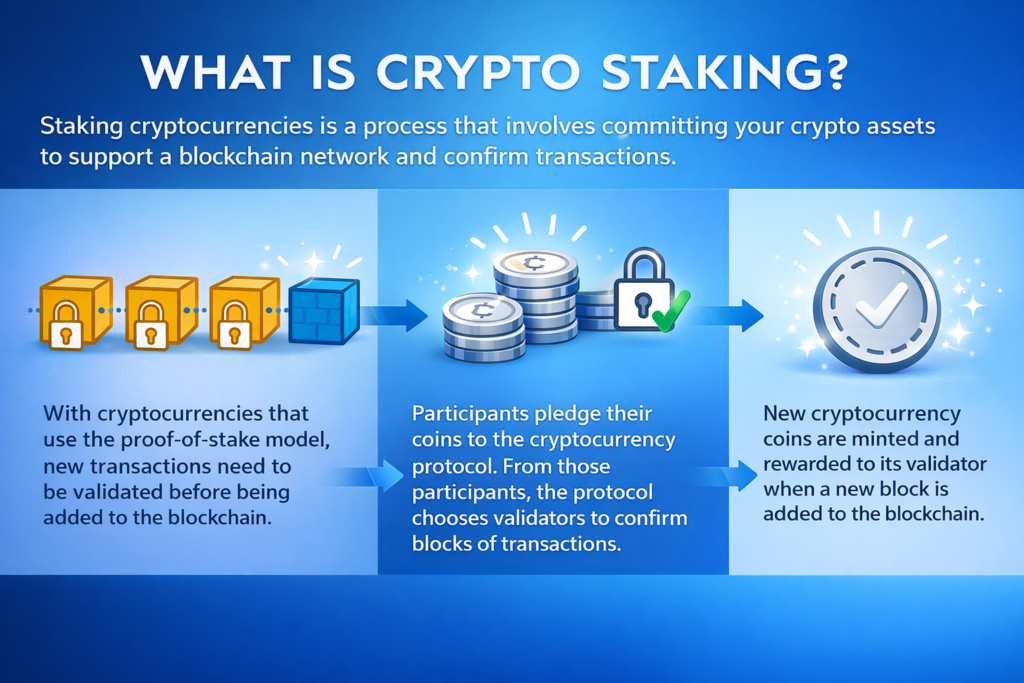
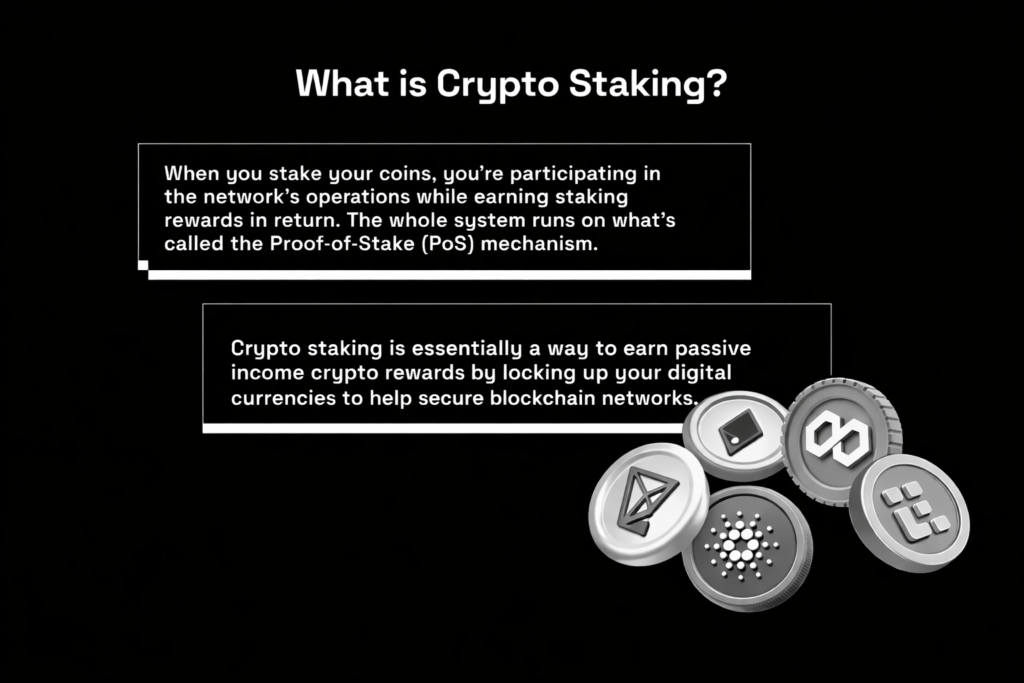
Crypto staking means holding and locking digital assets in a Proof of Stake blockchain. In return, the network rewards participants for helping maintain security and transaction validation.
You can think of staking as a method where:
- You support the network
- The blockchain confirms transactions
- You may receive staking rewards
Therefore, staking has become an important part of many crypto ecosystems.
Why Staking Matters in Blockchain
Staking plays a major role in blockchain technology because it helps networks stay secure and decentralized.
Moreover, staking offers benefits such as:
- Faster transaction validation
- Lower energy consumption
- More participation from users
That’s why staking is widely used in networks like Ethereum.
How Does Staking Work? (Step-by-Step)
Let’s break down the process clearly.
Step 1: Choose a Proof of Stake Coin
First, you need a cryptocurrency that supports staking, such as:
- Ethereum (ETH)
- Cardano (ADA)
- Solana (SOL)
- Polkadot (DOT)
Step 2: Lock Your Tokens
Next, you deposit tokens into a staking wallet or platform. This locking process allows the blockchain to use your assets for validation.
Step 3: Validators Confirm Transactions
Validators use staked tokens as collateral to confirm new blocks. As a result, staking replaces traditional mining in Proof of Stake systems.
Step 4: Earn Rewards
Finally, participants receive rewards in the form of additional tokens. Therefore, staking can become a useful passive earning strategy for long-term holders.
Staking vs Mining
Staking differs from mining in important ways.
| Feature | Staking | Mining |
|---|---|---|
| Consensus Type | Proof of Stake | Proof of Work |
| Energy Usage | Low | High |
| Hardware Needs | Not required | Requires powerful machines |
| Reward Method | Staking rewards | Mining rewards |
So, staking is often considered a more eco-friendly alternative.
Benefits of Crypto Staking
Crypto staking offers several advantages.
✅ Passive Rewards
Staking allows investors to earn rewards while holding assets long-term.
✅ Network Security Support
When users stake tokens, they help strengthen blockchain security.
✅ Lower Environmental Impact
Unlike mining, staking does not require huge computing power.
✅ Beginner-Friendly Options
Many exchanges provide easy staking services for beginners.
Risks of Staking (Important)
Although staking can be beneficial, it has risks that beginners must understand.
Lock-Up Periods
Some blockchains require tokens to remain locked for a certain time.
Price Volatility
Even if you earn rewards, token prices can fall.
Platform Security Risks
Using untrusted platforms increases the risk of hacks or scams.
Therefore, always research before staking funds.
Best Staking Options for Beginners
Beginners can explore staking through:
- Trusted exchanges (Binance, Coinbase)
- Wallet staking (Trust Wallet, Ledger)
- Liquid staking services (Lido)
However, you should always check fees and withdrawal rules.
Is Staking Safe for Beginners?
Yes, staking can be safe if beginners follow simple rules:
✅ Start with small amounts
✅ Use reliable platforms
✅ Avoid unrealistic reward promises
✅ Secure wallets with 2FA
Moreover, staking works best for people with long-term investing goals.
Frequently Asked Questions (FAQ)
How much can you earn from staking?
Rewards depend on the coin, network, and platform. Always focus on realistic returns.
Can you lose money while staking?
Yes. Token prices may drop, and some platforms carry risks.
Is staking better than trading?
Staking is generally less stressful than active trading because it supports long-term holding.
Conclusion
Staking Explained clearly shows that staking is a popular way to earn rewards while supporting blockchain networks. It offers passive opportunities, but beginners should also understand risks such as volatility and lock-up rules.
With proper research and security, staking can be a smart addition to a long-term crypto strategy.
Disclaimer
This article is for educational purposes only and does not constitute financial or investment advice. Crypto staking involves risk.