

Introduction
Portfolio management is one of the most important skills for anyone investing in cryptocurrency. Instead of putting all your money into one coin, portfolio management helps you spread risk and make smarter investment decisions.
Because crypto markets are highly volatile, managing your portfolio properly can protect your capital and improve long-term stability.
In this guide, you will learn what portfolio management means, why it matters in crypto, how to diversify safely, and beginner-friendly strategies for 2026.
What Is Portfolio Management?
Portfolio management means selecting and managing a group of investments to achieve financial goals while controlling risk.
In simple words:
Portfolio management helps you balance your investments instead of relying on only one asset.
A crypto portfolio may include:
- Bitcoin (BTC)
- Ethereum (ETH)
- Altcoins
- Stablecoins
- DeFi tokens
- NFTs (optional)
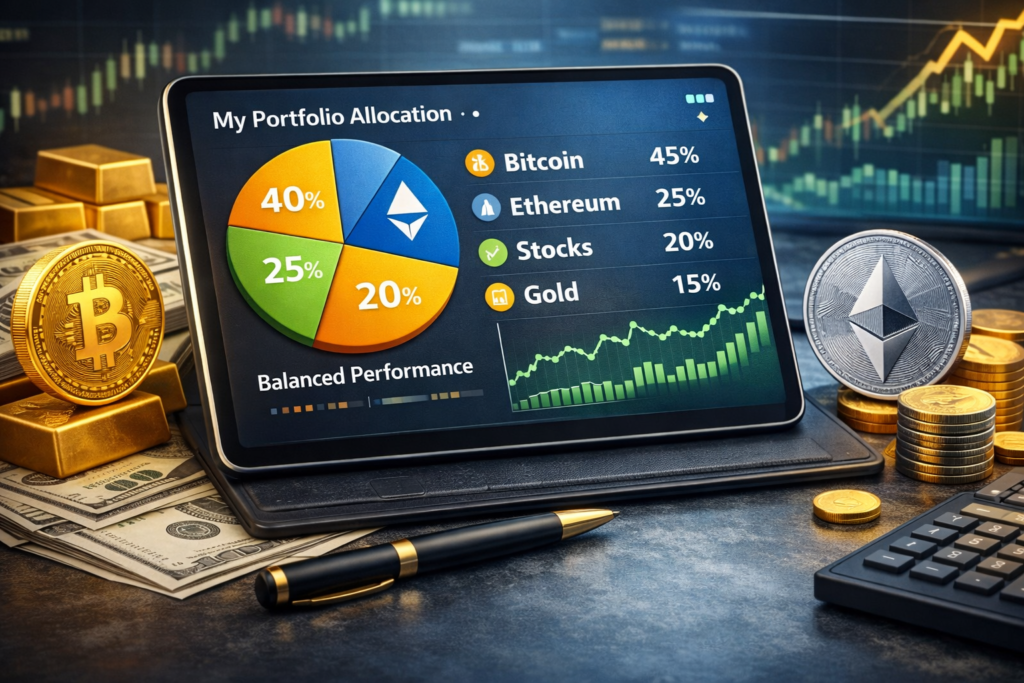
Why Portfolio Management Matters in Crypto
Crypto prices change quickly, sometimes within hours.
Therefore, portfolio management is important because it helps you:
- Reduce risk
- Avoid emotional investing
- Stay prepared during market crashes
- Build a long-term strategy
- Maintain portfolio balance
Moreover, diversification can prevent large losses from a single failing project.
Portfolio Management Explained: Key Principles
Let’s explore the core rules of good portfolio management.
1. Diversification
Diversification means spreading your investments across different assets.
For example, instead of investing 100% in one coin:
- 50% Bitcoin
- 30% Ethereum
- 10% Strong altcoins
- 10% Stablecoins
As a result, your portfolio becomes more stable.
2. Risk Management
Every investment carries risk.
That’s why you should:
- Invest only what you can afford to lose
- Avoid putting all funds into high-risk coins
- Use secure wallets and exchanges
3. Asset Allocation
Asset allocation means deciding how much money to invest in each category.
A beginner-friendly allocation might look like:
- Large-cap coins (BTC, ETH): 60–70%
- Mid-cap altcoins: 20–30%
- Stablecoins: 10%
This balance reduces volatility.
4. Regular Portfolio Review
Markets change over time.
Therefore, you should review your portfolio monthly or quarterly to ensure it matches your goals.
5. Rebalancing
Rebalancing means adjusting your portfolio when allocations change.
For example:
- Ethereum grows too much and becomes 50% of portfolio
- You sell some ETH and rebalance back to 30%
This keeps risk under control.

How to Build a Crypto Portfolio as a Beginner
Here is a step-by-step approach.
Step 1: Define Your Investment Goal
Ask yourself:
- Am I investing long-term?
- Do I want moderate risk or high risk?
- How much can I invest safely?
Clear goals improve decision-making.
Step 2: Start With Strong Cryptocurrencies
Beginners should prioritize trusted projects like:
- Bitcoin (BTC)
- Ethereum (ETH)
These coins are considered more stable compared to small altcoins.
Step 3: Add Limited Exposure to Altcoins
Altcoins can provide growth, but they carry higher risk.
Therefore, choose only strong projects with:
- Real use cases
- Active development
- Good market adoption
Step 4: Keep Some Funds in Stablecoins
Stablecoins reduce volatility and provide liquidity during dips.
Examples:
- USDT
- USDC
Step 5: Focus on Security
Portfolio management also includes protecting your investments.
Use:
- Hardware wallets
- Two-factor authentication
- Strong passwords
Common Portfolio Management Mistakes
Beginners often make these mistakes:
❌ Investing based on hype
❌ Buying too many random coins
❌ Ignoring risk management
❌ Not rebalancing
❌ Panic selling during market dips
Therefore, always stick to your strategy.
Portfolio Management Tips for 2026
Here are smart tips for crypto investors:
✅ Focus on quality projects
✅ Avoid leverage trading in your portfolio
✅ Invest gradually using Dollar Cost Averaging (DCA)
✅ Stay updated with major news
✅ Think long-term instead of chasing quick profits
Is Portfolio Management Useful for Small Investors?
Yes, portfolio management works even if you invest small amounts.
Even with $100, you can diversify and manage risk properly.
Frequently Asked Questions (FAQ)
What is the best crypto portfolio for beginners?
A beginner portfolio usually includes mostly Bitcoin and Ethereum with small exposure to altcoins and stablecoins.
How often should I rebalance my portfolio?
Most investors rebalance monthly or quarterly depending on market conditions.
Can portfolio management reduce losses?
Yes. Diversification and risk management can reduce the impact of crashes.
Conclusion
Portfolio management is essential for crypto investors who want long-term success.
Instead of gambling on one coin, a well-managed portfolio helps you diversify, control risk, and stay prepared for market volatility.
If you are a beginner, start with strong assets, invest gradually, and always focus on security and discipline.
Disclaimer
This article is for educational purposes only and does not constitute financial or investment advice. Cryptocurrency investments carry risk.