What Is Web3?
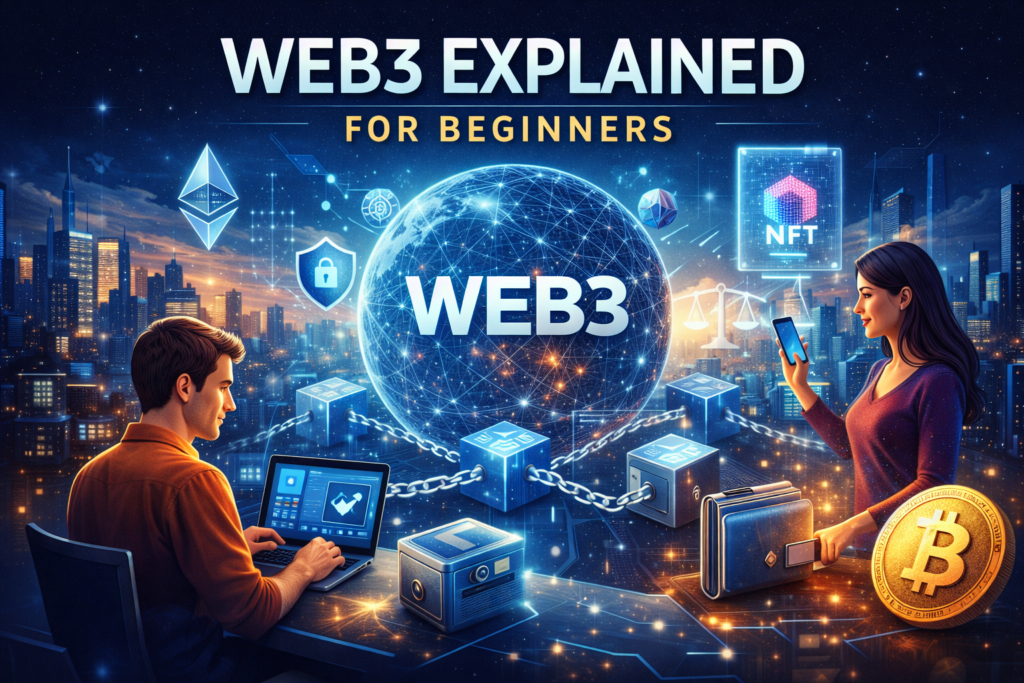
Web3 (also called Web 3.0) refers to a decentralized internet built on blockchain technology.
Unlike Web2, where companies like Google, Facebook, and Amazon control data, Web3 gives control back to users.
In simple terms:
Web3 is an internet where you own your digital identity, assets, and content.
Web3 combines technologies such as:
- Blockchain
- Smart contracts
- Cryptocurrencies
- NFTs
- Decentralized applications (dApps)
Why Is Web3 Important?
Web3 matters because it changes the way people interact online.
Instead of relying on centralized platforms, Web3 allows users to:
- Own their data
- Control digital money
- Participate in communities
- Earn rewards directly
Moreover, it reduces censorship and creates a more open internet.
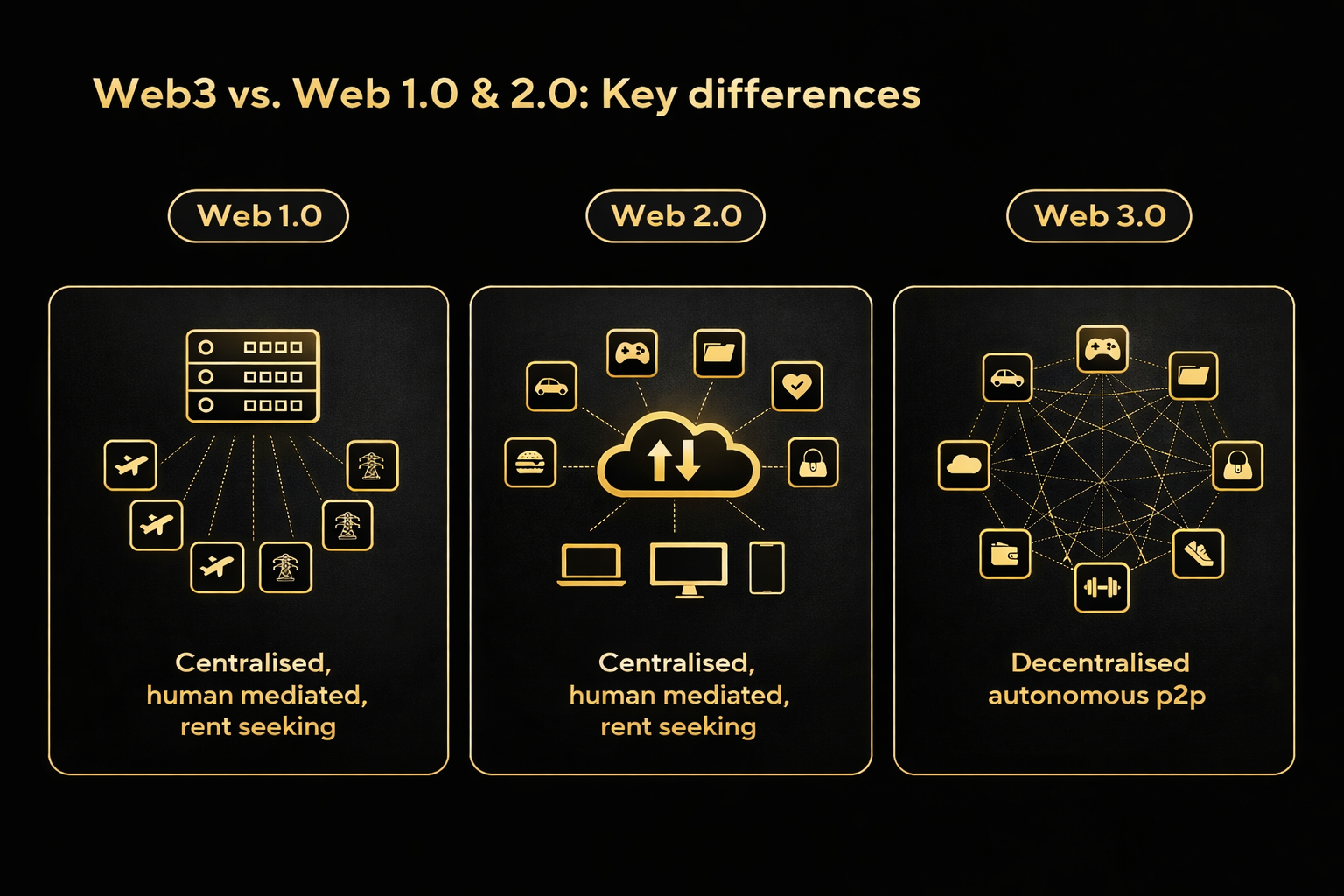
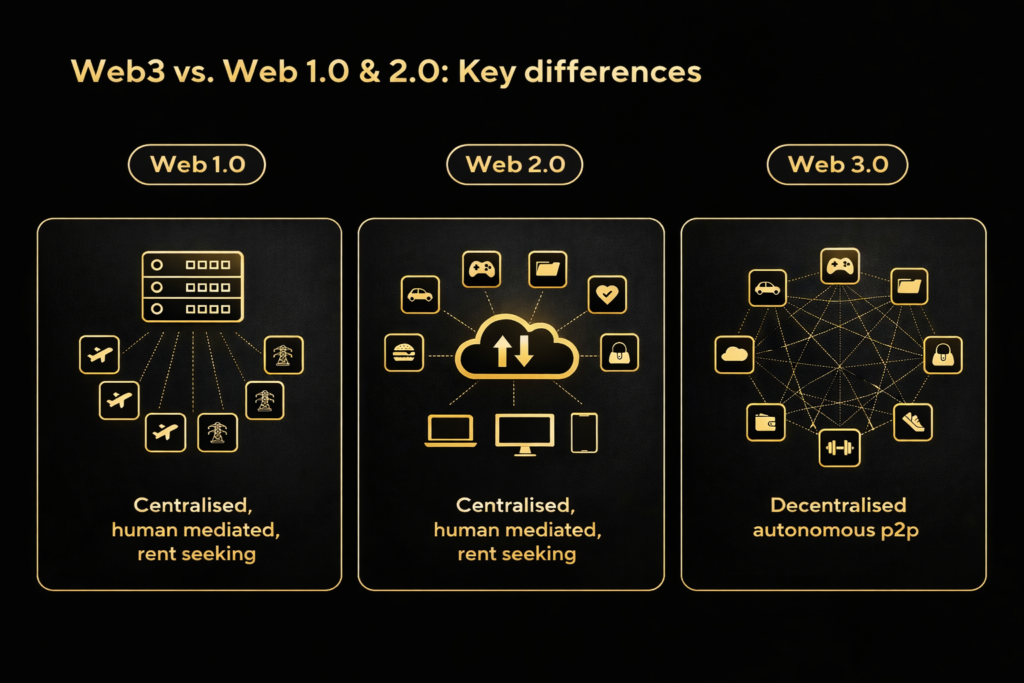
Web1 vs Web2 vs Web3 (Simple Comparison)
| Internet Version | Time Period | Key Feature |
|---|---|---|
| Web1 | 1990s | Read-only websites |
| Web2 | 2000s–Now | Social media + centralized apps |
| Web3 | Future | Decentralized + user ownership |
Web3 Explained: How Does Web3 Work?
Web3 works using blockchain networks and smart contracts.
Let’s break it down step by step.
Step 1: Blockchain Stores Data Securely
First, Web3 uses blockchain instead of centralized servers.
Blockchain records information across multiple computers, making it transparent and secure.
Step 2: Smart Contracts Run Applications
Next, smart contracts automate agreements and transactions.
For example, a DeFi app can lend money without a bank using smart contract code.
Step 3: Digital Wallets Replace Passwords
In Web3, users log in using crypto wallets instead of email/password.
Popular wallets include:
- MetaMask
- Trust Wallet
- Coinbase Wallet
As a result, users control their identity directly.
Step 4: Decentralized Apps (dApps) Power Web3
Web3 platforms run on decentralized applications instead of company-owned servers.
Examples include:
- Uniswap (DeFi)
- OpenSea (NFTs)
- Lens Protocol (Social Web3)
Step 5: Tokens Create Digital Ownership
Finally, Web3 introduces tokens and NFTs that represent ownership.
Therefore, users can own:
- Digital art
- In-game items
- Governance rights
- Crypto assets
Key Features of Web3
Web3 offers unique features that traditional internet cannot.
1. Decentralization
Web3 removes central control and distributes power across networks.
2. User Ownership
Users own their assets, content, and identity.
3. Transparency
Blockchain transactions remain visible and verifiable.
4. Permissionless Access
Anyone can participate without approval from big companies.
5. Token-Based Economy
Web3 rewards users through crypto tokens.
Real-World Use Cases of Web3
Web3 already impacts many industries.
1. Decentralized Finance (DeFi)
Web3 powers DeFi platforms for:
- Lending
- Borrowing
- Token swaps
- Staking
2. NFTs and Digital Ownership
NFTs allow creators to sell digital assets directly.
3. Blockchain Gaming
Players truly own in-game items in Web3 games.
4. Decentralized Social Media
Web3 social platforms reduce censorship and give creators more control.
5. DAOs (Decentralized Communities)
DAOs allow communities to govern projects collectively.
Benefits of Web3
Web3 provides many advantages:
✅ Better privacy
✅ User ownership
✅ Global participation
✅ Reduced middlemen
✅ Direct creator earnings
✅ Open innovation
In addition, Web3 introduces new business models for the internet.
Challenges and Risks of Web3
Although Web3 is promising, it still faces challenges.
- Technical complexity
- Scams and fraud in crypto
- Wallet security issues
- Regulatory uncertainty
- Limited scalability
Therefore, beginners should learn carefully before investing or using Web3 apps.
Is Web3 the Future of the Internet?
Many experts believe Web3 will shape the next era of digital life.
Web3 could transform:
- Online banking
- Digital identity
- Social media
- Entertainment
- Ownership models
However, Web3 adoption will take time as technology improves.
Conclusion
Web3 is the next evolution of the internet where users gain ownership, privacy, and control.
Web3 explained clearly shows that blockchain, smart contracts, NFTs, and decentralized applications will play a major role in shaping the digital future.
If you want to understand crypto and modern internet trends, Web3 is one of the most important concepts to learn today.
Disclaimer
This article is for educational purposes only and does not provide financial or investment advice.