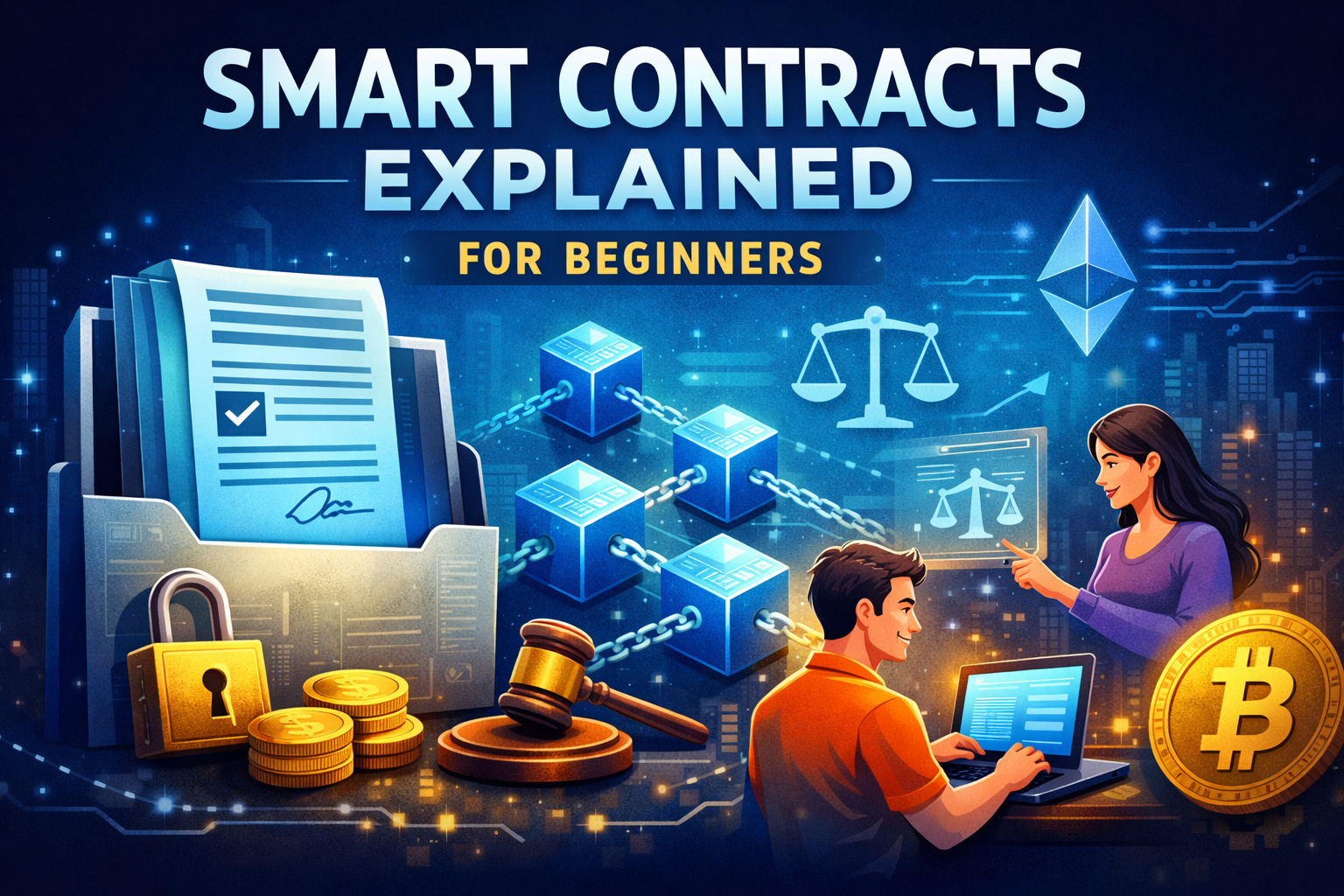
What Are Smart Contracts?

A smart contract is a self-executing contract written in code. Instead of relying on lawyers or intermediaries, smart contracts automatically enforce rules once conditions are fulfilled.
Think of it like this:
A smart contract works like a digital vending machine — you put in money, choose an item, and the machine delivers it automatically.
Similarly, smart contracts execute actions without needing trust between two parties.
Why Are Smart Contracts Important?
Smart contracts matter because they bring automation and transparency to agreements.
They help users:
- Avoid middlemen
- Reduce costs
- Improve trust
- Execute faster transactions
Moreover, they allow decentralized applications to function smoothly.
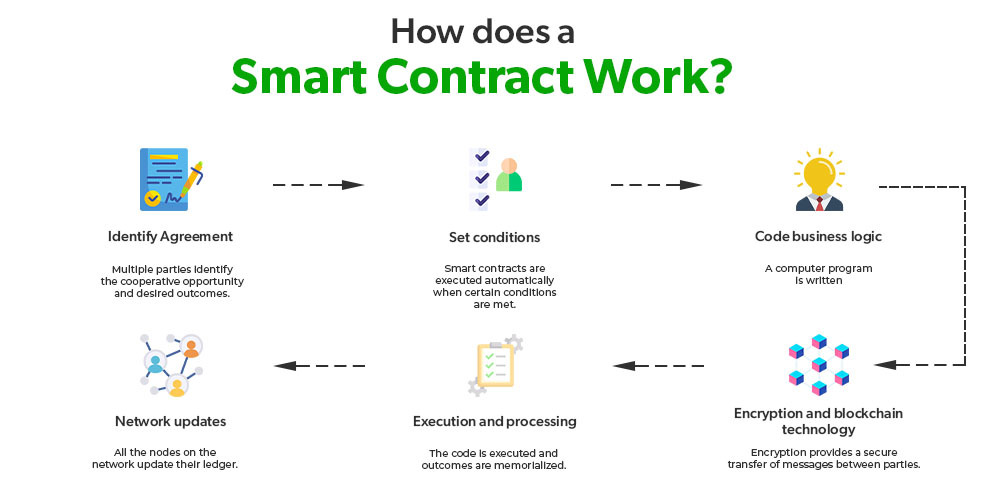
Smart Contracts Explained: How Do They Work? (Step-by-Step)
Let’s break down the process clearly.
Step 1: Contract Terms Are Written in Code
First, developers define rules in code, such as:
- If payment is received
- Then ownership transfers
For example, a smart contract can release funds only after a product is delivered.
Step 2: The Contract Is Deployed on Blockchain
Next, the smart contract is uploaded to a blockchain network like Ethereum.
Once deployed, the blockchain stores it permanently.
Step 3: Users Interact with the Contract
After that, users trigger the contract by performing an action, such as:
- Sending crypto
- Buying an NFT
- Staking tokens
Step 4: Blockchain Verifies the Transaction
The blockchain network verifies whether conditions are met.
As a result, no one can cheat the system.
Step 5: Automatic Execution Happens
Finally, the smart contract executes automatically.
For example:
- Funds transfer instantly
- NFT ownership updates
- Loan repayment processes
Therefore, smart contracts remove delays and manual work.
Smart Contracts and Ethereum
Ethereum made smart contracts popular.
In fact, Ethereum is the leading platform for smart contract development.
That’s why many blockchain innovations like:
- DeFi
- NFTs
- DAOs
- Web3 apps
are built on Ethereum smart contracts.
Real-World Use Cases of Smart Contracts
Smart contracts have many real-life applications.
1. Decentralized Finance (DeFi)
DeFi platforms use smart contracts for:
- Lending and borrowing
- Token swapping
- Yield farming
For example, Uniswap runs entirely on smart contracts.
2. NFTs (Digital Ownership)
NFT marketplaces use smart contracts to:
- Verify ownership
- Transfer assets
- Pay royalties automatically
3. Supply Chain Management
Companies use smart contracts to track goods and release payments after delivery.
4. Insurance
Smart contracts can process insurance claims automatically once conditions are met.
5. Voting Systems
Blockchain voting with smart contracts increases transparency and reduces fraud.
Benefits of Smart Contracts
Smart contracts offer many advantages:
✅ Automation
✅ Lower costs
✅ Faster execution
✅ Transparency
✅ No intermediaries
✅ High security
In addition, they work globally without borders.
Risks and Challenges of Smart Contracts
Although smart contracts are powerful, they also have risks.
Code Bugs
If developers write faulty code, hackers may exploit vulnerabilities.
Irreversible Actions
Blockchain transactions cannot be reversed easily.
Legal Uncertainty
Many countries still lack clear regulations for smart contracts.
Therefore, smart contracts require careful auditing and secure development.
Are Smart Contracts Safe for Beginners?
Smart contracts are generally safe, but beginners should:
- Use trusted platforms
- Avoid unknown DeFi projects
- Never share private keys
- Learn before investing
Moreover, always research before using smart contract-based apps.
Future of Smart Contracts
Smart contracts will likely play a major role in:
- Web3 growth
- Digital banking
- Automated businesses
- Tokenized real-world assets
As blockchain technology evolves, smart contracts will become even more efficient.
Conclusion
Smart contracts are one of the most revolutionary parts of blockchain technology.
They allow agreements to run automatically, securely, and transparently without intermediaries.
Smart contracts explained clearly show why Ethereum, DeFi, NFTs, and Web3 depend on them.
For beginners, understanding smart contracts is an important step toward the future of decentralized digital systems.
Disclaimer
This article is for educational purposes only and does not provide financial or investment advice.